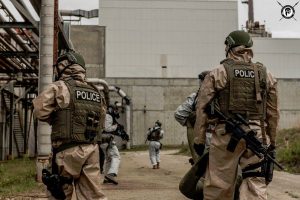

Government Training Institute Courses
<< Back to Course List

SWAT I
The preparedness of State and Local SWAT teams is one of the major initiatives of the United States Department of Homeland Security. Under the Department of Homeland Security typing system, there are three typing classifications ranging from a Type III team (the basis of this course), to a Type I team, the most equipped and capable. The typing system has been created to flow with the overall Incident Command System (ICS) structure. In response to the Department of Homeland Security’s creation of the SWAT Team Typing system, the Government Training Institute (GTI), has created three advanced courses for SWAT teams.

Advanced SWAT Operations for Terrorist Environments Type I
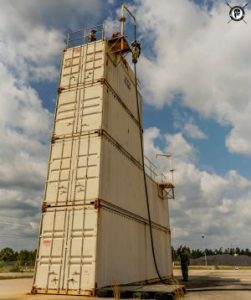
  • TYPE I SWAT COURSE (20 DAYS) DHS PRE APPROVED COURSE
  • For full-time SWAT teams with robot, tech surveillance, explosive breaching, rappelling and fast roping capabilities.
  • Scheduled for release and course scheduling during 2006-2007 training calendar year.

  • Course Dates
  • Download Packet
Program Overview
The Government Training Institute and Idaho State University (ISU) proudly announce the first SWAT Team training system in the United States to address the Department of Homeland Security SWAT Team Classification System. This course is now approved to receive U.S. Department of Homeland Security (D.H.S.) grant funds, allowing state and local law enforcement agencies to attend the training using D.H.S. grant monies to pay for tuition, overtime, meals, lodging, and associated backfill costs. While the class is approved for the use of these funds at the federal level, each state’s Point of Contact (POC) must also approve the use of the funds for officers to attend the course.

To achieve the status this 179 hour / 20 day course has obtained from D.H.S.’s Office of Grants & Training, the Government Training Institute and Idaho State University had to go through a lengthy and thorough 5 phase review process that took 6 months to complete. The 920 page student manual took time to thoroughly review.

The preparedness of state and local SWAT teams in the United States is one of the major initiatives of the Department of Homeland Security. In 2004, the D.H.S. created a comprehensive classification system for U.S. SWAT teams. There are three typing classifications ranging from Type III to Type I teams. The classification system was created to support the overall Incident Command System (ICS), allowing commanders at an incident to quickly determine what resources are available to them based upon the equipment, resources, and training levels of various SWAT teams.

This course creates standardized curriculum throughout the United States. Until the creation of this course, SWAT team training varied greatly from state to state and jurisdiction to jurisdiction, making it extremely difficult for Incident Commanders to gain a true barometer of capabilities of the resources available to them.

Course Benefits
Agency heads, SWAT Team Leaders and SWAT operators will benefit from this course by attending training that:
  • Addresses current case law
  • Is approved by the federal government for utilization of SLGCP funds
  • Is the new national standard for SWAT team training
  • Addresses the human body’s true response when encountering perceived deadly threats
  • Addresses and utilizes the newest technologies available
  • Thoroughly addresses PPE and WMD issues
Course Details
The Type I SWAT Operator’s Course is the most comprehensive SWAT program ever to be offered to state and local agencies. The program covers 56 separate modules in 20 days. Each student will be issued a training manual, copies of student’s written exams and practical application examinations.

Students who successfully graduate the Type I SWAT Operator’s Course will have earned it. There are stringent standards that all students must achieve in order to pass the course. They will be tested daily, and on occasion, several times a day. Every student must prove that they are capable of being an operational member of a Type I SWAT team. Student evaluation and performance measures are broken down into the following: Student performance will be evaluated by a variety of methods. These methods include:
  • Written Pre-Test · Daily Written Tests · Written Post-Test · Daily Practical Exercise Evaluations · Final Comprehensive Exercise
The student’s scores will be compiled and tallied in the following manner:
  • 12 Written Daily quizzes = 25% of final score · 1 Final Written Exam = 25% of final score · 20 Daily Performance Evaluations = 25% of final score · 1 Final Scenario (Culmination Exercise) = 25% of final score
Students must complete the course with a minimum of 70% average in order to receive a Certificate of Training.

The Written Pre-Test is a thirty (30) question closed book test that will evaluate the base knowledge of the student prior to receiving any instruction. This test will not be utilized as a criterion for course completion and graduation; however, the results of this test will be recorded and compared to the Written Post-Test. (The written pre-test will be handed out to the students at the time of testing).

The Daily Written Tests are small closed book quizzes ranging from four (4) to twelve (12) questions based homework assignments provided to the students at the end of class the day prior to each daily written test. Most mornings will begin by the students taking a closed book written test in which they are provided 20 minutes to complete. These test scores are recorded and go towards the student’s final grade. (The daily written tests will be handed out at time of testing).

The Written Final Exam is a one hundred and twenty (120) question closed book test comprised of a broad base of questions derived from each instructional module objectives within the student manual. This test is recorded and will go towards the student’s final grade. (The Written Exam will be handed out at the time of testing).

Daily Practical Exercise Evaluations are completed while the students are performing practical exercises following classroom instruction on the particular topic of evaluation. Students will be given time to watch the instructors demonstrate the exercise and will be provided time to perform the necessary tasks in a “practice” mode before the students will be evaluated. When the instructor(s) feel that the students have been provided enough time to rehearse (times will fluctuate based upon the ability levels of the group), the instructor(s) will announce to the students that practice time is over and evaluations are beginning. These evaluations examine some or all of the following:
  • Initiative
  • Participation
  • Tactical and strategic actions
  • Adherence to directions and directives
  • Safety
  • Communications
  • Team work
These Daily Practical Exercise Evaluations are examined first on a simple Pass/Fail basis. If a student receives a failing mark for any category, the student will be informed of the grade/mark, receive explanation from the evaluator of the reasoning for the grade/mark, and provided the opportunity to correct the action. If the student fails to receive a passing mark after three attempts (with the exception of certain safety violations further explained below), the student will be excused from the class and provided the opportunity to retake the class at another date and time. The Daily Practical Exercise Evaluations will also count towards the student’s final score. For every category they are given 3 points for successful completion after the first attempt, 2 point for the second and 1 point for the third attempt. (The Daily Practical Exercise Evaluations will be handed to students at the time of testing).

Safety Evaluations will be performed every day, including the day of the final scenario. Certain safety violations will be addressed immediately by the instructors/evaluators. These violations, depending on severity, may be grounds for dismissal from the class. The safety violations are split into three categories, minor (category I), moderate (category II) and major (category III). If a student conducts any safety violation the offense will be recorded on a daily safety violation sheet. Category I offenses can be violated 3 times before the student is called before the Safety Review Board. Category II offenses can only be violated twice before the student is called before the Safety Review Board and category III offenses are called before the Safety Review Board on the 1st offense. Category III offenses are as follows:
  • Muzzling / Lasering any operator, evaluator or spectator
  • Violating 1 meter rule (engagement or aiming)
  • Finger in trigger well outside of target engagement
  • Failure to identify or consider backstop
  • Possessing live ammunition or non-approved firearm or other weapon in non-designated area
  • Failure to follow directions or directive from instructors or safety staff
  • Improper, unjustified or excessive force
Safety Review Board
If a student reaches the level of safety violations that is unacceptable (1 category III, 2 category II or 3 category I), their violation report will be immediately forwarded to the Safety Review Board for review. The Safety Review Board is made up of all of the course instructors and evaluators involved in the class and will be chaired by the most senior instructor who did not present the violation to the board. The Safety Review Board will evaluate the Safety Evaluation report and take both written and oral statements from the instructor who witnessed the violation(s). The board will also take oral statements from the student. If the student denies the allegation, fellow student witnesses will be brought in before the board and their oral testimonies will be heard by the board. After hearing the statements from both parties, the Board will make a decision as to whether or not the student will be dismissed from the class.

The Final Comprehensive Scenario (Culmination Exercise) will test the participants’ knowledge, skills and abilities obtained from this course. Participants are evaluated as individual members of a team and as a consolidated team during this exercise. The exercise will consist of a high-risk SWAT Operation that will require the students to perform the following actions (which they will be rated on):
  • Receive initial intelligence briefing
  • Establish perimeter / containment
  • Complete threat report / analysis
  • Arrange for CBRNE materials testing and air sampling
  • Form Deliberate Assault Team
  • Form Scouting Team
  • Conduct preliminary scene assessment
  • Conduct the following scout missions:
    • Intelligence Scout
    • Map / Route Scout
    • Area Scout
    • Target Scout
    • Daytime Scout (if applicable)
    • Nighttime Scout (if applicable)
    • Time of Operation Scout (if applicable)
    • Update Scout (if applicable)
  • Conduct a 360-degree visual sweep for command detonation, secondary devices, and booby traps
  • Label the building and ports
  • Attempt to gather blueprints and / or floor plans
  • Interview / interrogate pertinent parties involved
  • Arrange for interpreters as required
  • Coordinate efforts with support agencies (as applicable) to include:
    • Other law enforcement agencies
    • Fire
    • EMS
    • Haz-Mat
    • Utilities
    • Aerial support
    • EOD
  • Complete safety plan including medical monitoring
  • Choose approach
  • Rapidly form and deploy Emergency Assault (IAT) teams (as applicable)
  • Conduct briefings on available information
  • Assign weapon systems
  • Assign responsibilities
  • Recommend placement of TIC / TOC / IC
  • Recommend placement of Sniper Teams
  • Formulate Tactical Action Plan, conduct briefing on the plan and coordinate plan with IC/OSC and appropriate teams / agencies / organizations
  • Choose LCC and identify to team
  • Archive all data in an appropriate format that allows for quick retrieval and subsequent analysis, investigation and official reports
  • Choosing and donning appropriate PPE
  • Deploy the team as planned
  • Make approach without compromise
  • Make entry
  • Clear all threats
  • Use appropriate force options
All students must participate in the Final Scenario (Culmination Exercise) in order to receive a Certificate of Training.

For the Final Scenario (Culmination Exercise), students will be graded on several categories evaluating their performance as individual operators and as members of a team on a scale from 1-5 with 1 being the lowest possible score and 5 being the highest. The scores will be tallied and each student must have an average score of 3 or better to receive a Certificate of Training. (A copy of the Final Scenario Evaluation Sheet will be handed to the students at the time of testing).

Student Course Performance Packet Every student will be provided with a Student Course Performance Packet. This packet will include the student’s scores for the following:
  • Pre-Test (does not count towards the final grade)
  • All daily quizzes
  • Final Written Exam
  • Daily Safety Evaluation Report(s)
  • Final Scenario Evaluation Report
  • Final Overall Score and Class Rating
Course Curriculum
Module One – Introduction and Administration
In this module, students will receive an overview of the Type I SWAT course. Activities for the course are covered, and all administrative requirements, such as registration, are completed at this time. Students will be introduced to the instructors and the other students in the class, and receive their student manuals. All participants will be administered a pre-test to assess their knowledge of course material.

Module Two – Disclaimer
In this module, students will hear where tactics and techniques for the class were developed, and receive an overview of outside influences and expectations that can affect any operation. Additionally, students will hear how any discrepancies between their policies or SOPs and this training should be dealt with.

Module Three – Written Pre-Test
In this module, students will take a written pre-test to determine their knowledge of SWAT operations, CBRNE events and PPE prior to receiving any instruction.

Module Four – Tactical Mindset
This module begins preparing participants for the shift in curriculum focus from static individual skills to dynamic team skills. By covering the stages of reaction time, phases of readiness and conditioning, and self control, this module helps prepare students for the mindset they will need for the rest of the course, as well as any tactical operation and stresses the need for staying level headed in a CBRNE environment.

Module Five– SWAT Concepts
This module examines the need for SWAT teams and historical examples of the development of tactical units throughout the world, historically dealing with terrorist threats. This module addresses the shift from SWAT teams being called upon to handle “everyday criminals” to terrorist cells and CBRNE events.

Module Six – Equipment Selection
Participants are introduced to the DHS / ODP Type I equipment list requirements and equipment shortcomings are addressed. Equipment procurement sources are discussed so participants have a better understanding of how to receive the equipment items they may need. PPE, SCBA, CCBA, APR and PAPR systems are discussed briefly in this module as they are covered in detail in a later stand-alone module, however each piece of equipment is evaluated for compatibility with PPE and respiratory protection systems.

Module Seven – Selection of Firearms
In this module, students will hear about six essential criterions for making the selection of any weapon system. This module also covers basic ballistic information and examines two major theories currently utilized in the study of ballistics. The ability of a weapon to sustain fire against a well armed terrorist is covered.

Module Eight – Body Armor
This module covers NIJ data on Class I through Class III protection as well as trauma plates of various materials. In this module, students will also hear about risks associated with stacking body armor and how CFR section 668 may apply to the issuance of body armor to Federal personnel. Decontamination issues and how body armor can effect operations in PPE and vice-versa are discusses.

Module Nine-Terrorism 101
This module introduces the student to worldwide terrorism. The student will be exposed to the essence of terrorism, terrorist activities and terrorist groups. The student, at the end of this module will be able to identify the characteristics of a terror organization and an act of terrorism and how they differ from both civil crimes and war crimes.

Module Ten – Weapons of Mass Destruction
Participants, in this module, will be exposed to Chemical, Biological, Radiological and Nuclear agent material incidents and introduced to the types of harm each weapon can cause. Students will learn self-protection methods and the importance of protection measures.

Module Eleven – Personal Protective Equipment Levels and Selection
In this module students will be exposed to selection criteria for choosing PPE, the four separate protection Levels of PPE, advantages and disadvantage to each level, respiratory protection requirements, problems commonly encountered while in PPE, various levels of heat related injuries and pre-deployment, deployment and post-deployment considerations.

Module Twelve – Personal Protective Equipment Practical Exercise
Students in this module will perform donning and doffing procedures with PPE as well as pre-deployment, deployment and post deployment medical screening.

Model Thirteen – Rappelling
Students will learn what equipment is needed to safely conduct rappelling operations, and the use of that equipment. They will learn several methods of constructing anchor points and learn how to properly utilize them during tactical operations.

Model Fourteen – Rappelling Practical Exercise
Students will tie the knots needed to safely conduct rappelling operations, will construct anchor points, and will demonstrate the ability to conduct controlled descents utilizing proper equipment. Students will construct several anchor points and utilize them during non-tactical operations.

Module Fifteen – Scouting, Pre-planning and Intelligence
Participants will be exposed, in this module, to the planning process involved with maintaining any tactical unit and conducting any tactical operation. Intelligence, scouting, diagramming, blueprints, operation orders and case law pertaining to the importance and pre-planning and intelligence are covered in this module. The potential for a terrorist to deploy booby traps, IEDs, early warning systems and counter surveillance are stressed in this module.

Module Sixteen – Close Threat Reconnaissance (CTR)
This module describes close threat reconnaissance situations and the actions that may be taken by SWAT teams to collect information of the crisis site prior to the assault. What constitutes a close threat reconnaissance that may require SWAT team members to operate proximal to the threat without actually engaging the threat in a tactical manner? It describes different types of equipment that can be employed, how it may be employed, and the equipments capabilities in various environments. It discusses case law that is pertinent to the collection of intelligence against private citizens that do not apply to exigent circumstances.

Module Seventeen – CTR PE
During this practical exercise the students will inventory, inspect, place into operation, perform designated functions relevant to each piece of equipment, and collect specified data with each piece of equipment when applicable.

Module Eighteen - Shooting Platforms and Sympathetic Nervous System Response to Threats
Students will be exposed, in this module, to the potentially detrimental effects on shooting platforms that are caused by the operator’s perception of a threat. Effects of the visual system, fine and complex motor skills, auditory system, circulatory system, respiratory system, and the ability of the brain to cognitively process threats will be examined in this module and students will be presented with numerous studies and statistics that show how shooting platforms are affected as a result of the response. Participants will hear about how certain shooting platforms are adversely affected with respiratory protection systems and how PPE and respiratory protection systems affect the operator’s vision and other body functions like dexterity. Participants will be presented with ideas and thoughts on preparing for, and dealing with these effects and shown techniques that compliment, not conflict the body’s natural response to threats.

Module Nineteen – Shooting Platforms and Sympathetic Nervous System Response to Threat Practical Exercise
In this module, students will see the effects of SNS response first hand utilizing training weapon systems. Students will don an APR or PAPR system to see how their shooting platforms are affected by these systems with both primary and secondary weapon systems. Students will also don both inner and outer PPE gloves to experience the impact they have on weapon manipulation.

Module Twenty - Cover and Concealment
In this module, students will examine the differences between cover and concealment and how best to utilize both effectively. Effects of bullet ricochet and a military study on the stopping capabilities of various items found in an urban setting are also covered. Topics of discussion will include the true definition of cover when going up against a terrorist with a fully automatic 7.62x39 and the definition of concealment if the terrorist has NVGs, thermal imagers or other night viewing devices.

Module Twenty One – Fast Rope Insertions
This block of instruction is designed to acquaint students with fast rope insertion methods. Student will understand duties and responsibilities of fast rope masters and ropers This block also familiarizes students to the various fast rope systems, and how to properly employ them in a SWAT application.

Module Twenty Two – Fast Rope Insertion Practical Exercise
During this practical exercise, students will demonstrate the ability to safely deploy the fast rope insertion system. Students will demonstrate the ability to conduct pre deployment checks, understand fast rope commands, and conduct controlled descents.

Module Twenty Three – Range Practical Exercise
During this practical exercise the students will learn proper weapon handling skills and techniques for the primary and secondary weapon systems as they pertain to a Close Quarters Battle Environment. This particular module sets the stage for the next range module which entails the students shooting in PPE. Instructors must feel confident with the student’s skills prior to them shooting in PPE.

Module Twenty Four – Tactical Movements Outside Target Structures
By stressing the fact that being compromised on the outside of the structure may jeopardize the entire mission and put team members and others at risk, this module covers four commonly utilized approaches and advantages to each type, open area crossings, movement in low light, obstacles, communication challenges, and the importance of noise and light discipline. This module addresses the possibility that a terrorist may utilize counter surveillance, early warning systems, or IEDs on the outside of the crisis site and tactical considerations for making approaches in PPE and working in a CBRNE environment.

Module Twenty Five – Tactical Movements Outside Target Structures Practical Exercise
In this module, students will work together as a team to approach a structure. They will encounter several dangers and must identify them and address them accordingly. Students will face highly armed terrorists (fellow students and GTI instructors) and engage them with training weapons. Students will encounter Improvised Explosive Devices and early warning systems and will make approaches in PPE. They will see first-hand the tactical considerations brought up in module 24. Module Twenty Six – Night Vision Devices
Students will be introduced to the capabilities that night vision goggles offer them. Students will become familiarized with night vision goggles and how to employ them for SWAT applications.

Module Twenty Seven – Night Vision Devices Practical Exercise
During this practical exercise students will learn how to properly employ night vision goggles. Students will demonstrate the ability to turn night vision goggles on, and how to focus them.. Additionally, students will demonstrate the ability to operate in a tactical environment while using night vision goggles, and will engage targets with their primary and secondary weapon systems.

Module Twenty Eight – Tactical Breaching
This module begins the student’s mental transition and preparation from activities outside the crisis site to the inside. By stressing pre-planning, speed and cover, this module covers choosing primary and alternate breach locations, port and cover locations and techniques, selecting team breachers, the three major breaching methods, and case law related to breaching. This module is an overview of breaching only and refreshes students to the basic concepts of the topic, however, this module covers CBRNE and PPE considerations applicable to those breaching options required and recommended for Type I SWAT teams, making it different than other breaching blocks typically presented to teams. Certain breaching methods, like exothermic for instance, have serious implications on PPE and these items will be discussed.

Module Twenty Nine – Tactical Breaching Practical Exercise
In this module, students will apply tactics and techniques discussed in Module 28. The students will see first-hand the limitations of breaching options presented by the use of certain PPE.

Module Thirty – Alternate Methods of Team Communication
SWAT work in PPE is difficult and presents several tactical considerations that are overlooked by those who do not often work in PPE. Communicating with team members, innocents, hostages and terrorist suspects while in PPE and respiratory protection requires alternate methods of communicating, such as hand signs, lights, strobes and other signaling techniques. This module discusses these techniques and addresses their importance relating to working in PPE.

Module Thirty One – Occupancy Control
In this module, participants will be refreshed on the principals of occupancy control, contact, control, cuff and search, and counter. While stressing reasonable use of force, students will then examine case law pertaining to protective detentions, protective frisks, protective handcuffing, handcuffing, minimal application of force, and general use of force issues. Students will learn about the numerous tactical considerations that come in to play when trying to go “hands-on” with terrorist suspects, working in a CBRNE environment, and limitations and concerns in PPE.

Module Thirty Two –Occupancy Control Practical Exercise
This module provides students the opportunity to practice the methods previously discussed in module 31. Students will be placed in PPE and must communicate with terrorist suspects (instructors) and their teammates at the same time. Students will experience tactical considerations and limitations of PPE and respiratory protection systems first-hand in this module.

Module Thirty Three– Dynamic Clearing Techniques
While dynamic entry and clearing techniques should be thoroughly understood by the students in this class, this module serves as a refresher but incorporates issues involving the use of PPE and respiratory protection systems in a CBRNE environment.

Module Thirty Four – Noise and Flash Diversionary Devices Overview
The use and applications of Noise and Flash Diversionary Devices should be old news to students in this class. This module refreshes students with the history, design, characteristics, and effectiveness of NFDDs but does not certify the students as end users of NFDDs. The psychological and physiological effects NFDDs have on people and case law pertinent to the deployment and use of NFDDs are also discussed. This module specifically addresses terrorism and CBRNE events by talking about hazards associated with clandestine chemical or biological laboratories, and the potential for aerosolizing or scattering CBRNE agents.

Module Thirty Five – Noise and Flash Diversionary Device Exposure
Students, in this module, will experience the psychological and physiological effects of NFDDs first hand. Students will also witness how CBRN agents could be aerosolized by the deployment of an NFDD.

Module Thirty Six – Dynamic Clearing Techniques Practical Exercise
In this module, students will experience all of the limitations and concerns of performing dynamic entries in PPE first-hand. After performing several entries without PPE, later in the module students will don PPE and encounter increasingly more difficult tactical challenges, including armed terrorists (instructors) who are bent on a shootout (with training weapon systems).

Model Thirty Seven – Tactical Rappelling Practical Exercise
Students will demonstrative the ability to conduct controlled tactical descents utilizing proper equipment. They will construct several anchor points and will utilize them during tactical operations.

Module Thirty Eight – Tactical Angles
In this module students will be exposed to tactical angles, including how to identify them, how to open and close them and why a team would choose to do so. Tactical considerations surrounding the use of PPE and respiratory protection systems will be discussed.

Module Thirty Nine– Tactical Angles Practical Exercise
Students, in this module, will experience first-hand how the noise of the PPE, communication difficulties due to PPE and APR or PAPR systems and field of view limitations due to APR or PAPR, effect how students identify and address tactical angles.

Module Forty – Slow and Deliberate Clearing Techniques
This Module will build upon the Tactical Angles block and will cover Slow and Deliberate Clearing Techniques. Slow and deliberate techniques are considered some of the safest entries a team can perform under “normal” circumstances, but they are also the most difficult and probably the most taxing on the team members. Slow and deliberate entries are not necessarily the safest entries in a CBRNE environment and may actually be the most dangerous. Numerous tactical considerations dealing with Slow and deliberate entries in PPE in a CBRNE environment are covered.

Module Forty One – Slow and Deliberate Clearing Techniques Practical Exercise
In this module students will experience first-hand tactical considerations and challenges performing slow and deliberate entries in and out of PPE. Students will encounter increasingly more difficult scenarios including mock CBRNE environments coupled with mock IEDs that require them to don PPE and utilize a slow and deliberate technique.

Module Forty Two – Improvised Explosive Devices and Explosive Materials Incidents
Participants, in this module, will be introduced to the various types of explosives and explosive materials incidents they may encounter in their careers. Emphasis will be placed on improvised explosive devices (IEDs) by examining various bodies, fillers, triggering systems, and delays that are commonly found with IEDs. Stand-off distances and public and self-protection issues are discussed within the module.

Module Forty Three – Improvised Explosive Devices Practical Exercise
In this module, students will make entry into a building structure both with and without pre-intelligence about the presence of IEDs. Students will be shown and required to utilize techniques with pole cameras, mirrors and lasers to locate the possible presence of not only terrorists (instructors) but IEDs and their components.

Module Forty Four - Range Practical Exercise #2
This module builds upon the previous live fire range session which allowed instructors to feel comfortable with the safety and proficiency level of each student regarding their firearm skills. In this module student will engage targets while on the move – TDS principles and operate in PPE.

Module Forty Five – Citizen and Team Member Recovery Techniques
While all students in this course should be well familiar with the citizen and or team member recovery process, this block is different in that evaluates recoveries in CBRNE environments, recovering casualties due to CBRNE agents v. gunshots or trauma, and tactical considerations involving recoveries in PPE.

Module Forty Six – Citizen and Team Member Recovery Techniques Practical Exercise
This module places students in several challenging scenarios that expose them to various issues involving encountering terrorist suspects (instructors) who attempt to keep a rescue team away from the casualty by providing sustained fully automatic rifle fire (training weapons), casualties caused from chemical agents, and recoveries on victims inside a CBRNE hot zone. Students will encounter first-hand limitations and tactical considerations created by PPE usage.

Module Forty Seven – Chemical Munitions and Delivery Systems
While this module is a refresher course for many and does not make certified end users out of the students, it does address various tactical considerations when working in PPE and introducing agents into CBRNE hot zones or clandestine chemical or biological agent laboratories. This module does not certify the students to deploy chemical munitions.

Module Forty Eight – Less Lethal Munitions and Delivery Systems
This module provides students with a look at deployment of LTL rounds with and without PPE. This module does not certify the students to deploy LTL.

Module Forty Nine – Vehicle Assaults
Vehicle assaults should be very familiar to all of the students in this course. However, this module will introduce many students to the fairly recent and seldom used technique of column assaults. Column assaults consider and compliment the operator’s SNS response much better than most commonly used assault techniques. Students will be exposed to a variety of tactical considerations involved with performing vehicle assaults while in PPE. Students will also hear about the importance of situational awareness and the possibilities of terrorist working together in multiple vehicles.

Module Fifty – Vehicle Assaults Practical Exercise
Students will, in the module, participate as members of a team that is required to perform multiple vehicle assaults from a variety of different angles. Students will also make approaches on vehicles containing obvious and more covert signs of containing CBRNE agents and will be required to conduct assaults while in PPE.

Module Fifty One - Hostage Rescue Operations
During this module of instruction, participants will be exposed to the tactics and theories associated with the tactical option involving hostage rescues. The special tactical considerations involving rescue operations in a CBRNE hot zone are discussed as part of the discussion involving the three major types of hostage rescue scenarios.

Module Fifty Two – Hostage Rescue Practical Exercises
During this practical exercise the students will learn to conduct hostage rescue operations using open air, vehicle and stronghold options. The students will learn to utilize direct to threat, dynamic and limited penetration entries during hostage rescue operations. The students will perform HR operations in a simulated CBRNE environment while wearing PPE.

Module Fifty Three – TIC / TOC Operations
During this period of instruction the students will learn about both the Tactical Intelligence Center and the Tactical Operation Center and critical components of both that take place inside during a tactical operation. Additionally, the students will learn how to establish and set up the TIC / TOC.

Module Fifty Four – Final Written Exam
This module consists of the final written exam that consists of a series of questions derived from nearly every module’s objectives. This test will be graded and students must obtain a score of 70% or better on this test to receive a course certificate.

Module Fifty Five – Comprehensive Final Exercise
The Final Comprehensive Exercise will test the participants’ knowledge, skills and abilities obtained from this course. Participants are evaluated as individual members of a team and as a consolidated team during this exercise. The exercise will consist of a high- risk SWAT Operation that will require the students to perform a variety of actions in which they will be rated on.

Module Fifty Six – Class Evaluation and Graduation
In this final module students will hear final comments from the instructors, perform an evaluation of the class and instructors, receive their student packets, and take a class photograph. Those students who successfully graduate the course will be provided a certificate of training.

Mandatory Equipment and Student Prerequisites
All students are required to bring the following equipment / items with them to class daily:
  • Writing utensil
  • North American Emergency Response Guidebook (NAERG)
  • Student manuals (after issued)
  • Agency issued Tactical SOP
  • Eye protection
  • Ear protection
  • Ballistic helmet
  • Ballistic vest
  • Web gear
  • Holster
  • Magazine Pouches
  • Tactical vest
  • NFDD pouches
  • Flashlight
  • Weapon mounted light systems (If available)
  • Negative and / or positive pressure respiratory protection system
  • Level C PPE Suit (charcoal or Tyvek® )
  • APR or PAPR user’s manual (provided by manufacturer of system)
  • Airflow indicators for PAPR systems (if using a PAPR as part of PPE)
  • Spare batteries for PAPR system (if using a PAPR as part of PPE)
  • Agency issued tactical uniform
  • All tactical duty equipment that is normally worn on the operator should be worn each day
  • Primary weapon system (Range days only)
  • Secondary weapon system (Range days only)
  • 1,000 rounds of primary weapon ammunition (Range days only)
  • 500 rounds of secondary weapon ammunition (Range days only)
  • Agency issued tactical night vision goggles.
  • All equipment must be in good working order.
  • If the student brings an SCBA system, then the agency will be required to have on-site appropriate spare cylinders, a fill station, and qualified support personnel to guarantee that the participant will not be excluded from exercises while they are re-filling or changing out cylinders.
Students must successfully complete all modules of the course to receive a certificate of training. Throughout the course, they will be required to wear their PPE Suits several times while training. It is important to know that students will not be able to don their PPE Suits if any of the following conditions exist:
  1. Blood pressure >150/90
  2. Resting heart rate >60% of Max HR
  3. Respiratory rate of >25 BPM
  4. Core Temperature of >99.8F
  5. Existence of major rashes or open wounds
  6. If the operator is physically ill
  7. If the operator has consumed any alcohol within 6 hours or heavy alcohol within 72 hours
  8. If the operator consumed any medications that would impair their ability within 24 hours
  9. Pregnant operators
Additionally, after doffing PPE, the operator must be able to recover quickly. Post deployment vital criteria are closely evaluated. Operators doffing PPE will not be able to re-don PPE within 24 hours if any of the following conditions exist:
  1. Blood pressure >160/100
  2. 1st minute HR >85% of Max
  3. 3rd minute HR <10 BPM from 1st minute
  4. Respiratory rate >30 BPM
  5. Temperature >100.4F
  6. Weight >3% of total
Four college credits from Idaho State University can be purchased by those who successfully complete the course of instruction.

Funding
State and local law enforcement agencies can utilize Department of Homeland Security Grant Program (HSGP) funds to pay for the course. Of the six programs making up the HSGP, agencies can utilize funds from the following programs:
  • State Homeland Security Program (SHSP)
  • Law Enforcement Terrorism Prevention Program (LETPP)
  • Urban Area Security Initiative (UASI)
It is important to note that although this training and the use of HSGP Funds is approved by DHS, the agency’s state POC must approve the use of the funds to attend the course.

2004, 2005 and 2006 funds can be used for the program. Grantees and sub-grantees are allowed to drawdown FY 2005 grant funds 120 days prior to expenditure. 2004 fund draw downs are limited to 3-5 days. The details on FY 2006 funds was not available at the time of the creation of this document.

Performance periods for DHS grants, unlike DOJ grants, are 30 months. The performance period for FY 2004 funds ends on 31 May 2006. The FY 2005 performance period is 1 October 04 through 31 March 2007.

Tuition, housing, meals, lodging, overtime and backfill costs are all allowable expenditures with the SHSP, LETPP and UASI funds. Agencies should experience no out-of-pocket expenses for the Type I SWAT Operator’s Course.

Tuition for the Type I SWAT Operator’s Course is $5,200 per student and includes the student manual, student progress book, over $250,000 worth of equipment for use in the course and an instructor to student ratio of no greater than 1/10.

The first step towards attending the program for most jurisdictions will be to contact the state’s administer of Homeland Security Programs. The state POCs can be found at http://www.ojp.usdoj.gov/odp/contact_state.htm

Contacts
Additional questions involving the course design, delivery or curriculum should be presented to:

GTI Training Deaprtment
For additional information regarding sales and services, please contact:
Brian Naillon, Email Brian
Alec Sarrazolla, Email Alec
Phone: (208) 938-5510
Toll Free: (866)938-5510
Fax: (208) 938-5507
Government Training Institute, Inc.
8814 Goose Creek Lane
Boise, ID 83714

Idaho State University
Institute of Emergency Management
Michael Mikitish, Program Coordinator
Email: mikimich@isu.edu
12301 W. Explorer Suite #102
Boise, ID 83713
(208) 373-1763
http://www.isu.edu/idiem


image

image